
Suffering a traumatic or acquired brain injury can lead to life-long disabilities. In such incidences Music Therapy (MT) and Neurologic Music Therapy (NMT) can be successfully implemented into a person’s rehabilitation programme alongside Physiotherapy, Speech and Language Therapy and Occupational Therapy, to support goals and improve outcomes.
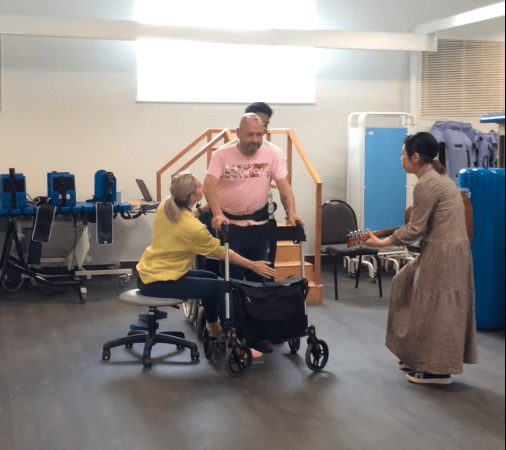
NMT is a systematic series of music-based interventions that addresses functional changes for people with neurological disorders. It involves techniques that use the perception, production and performance of music to stimulate, shape, and change movement dynamics, speech and language skills, and cognitive skills.
Music Therapy is an established psychological clinical intervention that supports people’s psychological, emotional, cognitive, physical, communicative and social needs through activities such as playing improvised music on instruments, listening to music, song writing, or learning to use melody and rhythm to support brain functioning.
Music is a language that connects and activates the human brain automatically. In neurorehabilitation, music is used as a treatment modality. The automaticity of response allows healthy and unaffected parts of the brain to be recruited, allowing patients to re-learn functions such as movement or speech, via these new neural pathways.
Remarkably, of all senses, it is hearing that remains sharp following a brain injury. Therefore, as long as a patient can hear, music can be used to stimulate responsiveness, which enhances rehabilitation outcomes.
Following an assessment, implementation of Neurologic Music Therapy enables those living with a TBI or who are deemed in a low arousal state, to be reached in order to help improve their initial diagnosis. NMT helps redirect functions, stimulating other areas of the brain in order to relearn skills that were lost as a result of the injury.
It is important to support the patient’s mental wellbeing following a brain injury and this is where music is able to take rehabilitation to a new level. NMT takes aspects of rehabilitation that may be repetitive and boring, causing disengagement from the patient, and makes them interesting – taking the focus off something painful. Neurologic Music Therapy actually makes rehabilitation more engaging, personalised and relevant, and as a result, can help to improve verbal communication, motor control and cognitive function.
Sensory regulation music sessions offer a great way to monitor and provide an enriched and sensory regulated environment, assisting in minimising sensory deprivation and providing structured input to maximise the individual’s ability to process information and respond to stimulation.
Even in a minimally conscious state or severely physically impaired, NMT can help people living with a brain injury to show signs of becoming more responsive, for example, smiling at their name being sung or when their favourite instrument is played.
Implementing Neurologic Music Therapy and Music Therapy into the rehabilitation programme of someone living with a brain injury transforms lives. Both modalities serve to improve psychological, cognitive and functional outcomes and goals, allowing people a chance at achieving a better quality of life.
QEF are able to offer NMT to all clients who are assessed as having potential to benefit from this type of therapy, at our specialist Care and Rehabilitation Centre just outside Leatherhead, Surrey.
Content provided in partnership with
Thanks to funding from: